
Porcelain Slab Countertops in Portland, Oregon: 2026 Guide
Porcelain Slab Countertops in Portland, Oregon: 2026 Guide
Porcelain Slab Countertops in Portland, Oregon: 2026 Guide
What Porcelain Slab Countertops Actually Are (and What They Are Not)
What Porcelain Slab Countertops Actually Are (and What They Are Not)
The word "porcelain" makes most people think of bathroom tile or dinnerware, which undersells what a modern porcelain slab is. These are sintered mineral panels — the same category of material sold under names like Dekton, Neolith, Laminam, and Florim. The manufacturing process compacts natural clays, feldspar, silica, and mineral oxide pigments under roughly 15,000 tons of pressure, then vitrifies the panel in a kiln. What comes out is closer to man-made stone than to tile.
Key characteristics that matter in a real kitchen:
Water absorption under 0.1%. Porcelain is functionally non-porous. It never needs sealing — not at install, not in ten years. That is a meaningful difference from granite, marble, and quartzite, all of which benefit from periodic sealing in Oregon's damp climate.
Extreme heat tolerance. You can set a cast-iron pan straight off the burner onto porcelain without thermal damage. Engineered quartz cannot make that claim — its polymer resin binder scorches and yellows around 300°F.
UV stability. Porcelain colors are mineral pigments fired into the body, so they do not fade. This is why porcelain has taken over outdoor kitchen work and why it is the right pick for a Portland kitchen with big south- or west-facing windows.
Very high scratch resistance. Most porcelain slabs land around 6–7 on the Mohs hardness scale, comparable to or above granite.
Thin profiles. Standard thicknesses are 6mm, 12mm, and 20mm. A 12mm slab weighs roughly half what a 3cm granite slab does, which opens up applications that stone cannot handle.
What porcelain is not: it is not indestructible. The same density that resists scratches also makes it less forgiving of point impacts on an unsupported edge or corner. A dropped stand mixer on a thin overhang can chip it. And because most porcelain slabs carry their pattern as a printed-and-fired surface layer rather than through the full body, a deep chip can expose a differently colored core. Through-body porcelain products exist and solve this, but they cost more.
What Porcelain Countertops Cost in Portland in 2026
What Porcelain Countertops Cost in Portland in 2026
Porcelain sits in the mid-to-upper range of the Portland countertop market. The material itself is often priced comparably to a mid-grade quartz, but fabrication labor runs higher because cutting porcelain requires different tooling, slower feed rates, and more careful handling. Here is what Portland and Vancouver WA homeowners should realistically budget, installed:
Entry-level porcelain (basic colors, 12mm): roughly $70–$95 per square foot installed
Mid-range designer patterns (marble looks, 12mm–20mm): roughly $95–$130 per square foot installed
Premium / through-body / bookmatched panels: roughly $130–$190+ per square foot installed
For a typical Portland kitchen with about 45 square feet of counter plus a 9-foot island, that generally lands between $5,500 and $11,000 for a complete porcelain installation. Add-ons that move the number:
Mitered box edge to make a 12mm slab read as a 2" or 3" thick counter: commonly $45–$90 per linear foot. This is the single most common upcharge and it is worth understanding before you compare bids.
Full-height backsplash from the same slab: often $55–$95 per square foot, and one of porcelain's best design moves.
Waterfall island panels: typically $900–$2,200 depending on height and whether the veining is continued across the miter.
Integrated or undermount sink cutouts: porcelain cutouts require reinforcement and careful relief drilling; budget more than you would for quartz.
Cooktop and outlet cutouts: each cutout is a stress point in a thin porcelain panel, so precision matters more than in stone.
Be skeptical of a porcelain bid that comes in dramatically under the range above. It usually means one of three things: the shop is quoting 6mm material intended for wall cladding rather than counters, the edge is a plain eased edge on a thin slab (which will look flimsy), or the shop has never fabricated porcelain and is about to learn on your kitchen. All three cost more to fix than to do right.
At Alpine Stones we quote porcelain the same way we quote everything else: one all-inclusive number covering templating, fabrication, edge work, cutouts, delivery, and installation, with no surprise line items added after the template visit.
Porcelain vs. Quartz vs. Granite: An Honest Comparison
Porcelain vs. Quartz vs. Granite: An Honest Comparison
Most Portland homeowners arrive already deciding between quartz and granite, so here is where porcelain genuinely wins, genuinely loses, and where it is a wash.
Where porcelain beats engineered quartz
Heat and UV, decisively. Quartz is roughly 90% ground natural quartz bound with 7–10% polymer resin, and that resin is the weak link — it discolors under sustained sun exposure and scorches under hot cookware. If your kitchen has a wall of glass facing the Willamette, or if you are surfacing anything outdoors on a covered patio, porcelain is the better engineering choice and quartz manufacturers themselves will tell you not to use their product outside.
Porcelain also wins on slab size. A typical quartz slab runs about 130" x 65"; large-format porcelain reaches similar lengths at greater consistency and in thin gauges that allow full-height backsplashes and waterfall panels without added structural load.
Where quartz beats porcelain
Fabrication forgiveness, edge options, and cost at the low end. Quartz takes a bullnose, ogee, or thick mitered laminated edge easily. Porcelain's thin profile means you are generally choosing between a simple eased edge or a mitered "box" edge that builds visual thickness — beautiful, but more labor. Quartz is also more widely stocked, so the entry price point is lower and lead times are shorter. And every countertop shop in the Portland metro can fabricate quartz; far fewer can properly fabricate porcelain.
Where porcelain beats natural granite
Consistency and maintenance. Granite is a natural product, so the slab you approve is the slab you get, veining quirks and all — which many homeowners love, but it makes planning a large multi-slab kitchen harder. Porcelain gives you repeatable patterning across as many slabs as you need. Porcelain also never needs sealing, while granite in a wet Pacific Northwest kitchen benefits from resealing every one to three years.
Where granite beats porcelain
Depth, edge work, and value per square foot in the mid range. Nothing printed can fully replicate the three-dimensional crystalline depth of a real granite or quartzite slab viewed in raking light. Granite at 3cm also handles heavy decorative edge profiles and unsupported overhangs that porcelain cannot. And a mid-grade granite is often the least expensive path to a durable, permanent stone countertop in Oregon.
The short version: choose porcelain for heat, sun, outdoor use, huge uninterrupted surfaces, and ultra-thin modern profiles. Choose quartz for a bulletproof low-maintenance interior kitchen at the best price. Choose granite or quartzite when you want genuine natural stone character and traditional edge detailing.
Still working out a budget? Get an installed price from your own measurements in about two minutes with the Alpine Stones instant quote tool, or call (503) 837-1980 to talk it through with a real person.

Best Applications for Porcelain in Pacific Northwest Homes
Porcelain's advantages line up unusually well with how people actually live in Oregon and Southwest Washington.
Covered outdoor kitchens. This is porcelain's clearest win. Our region cycles through wet winters, freeze-thaw swings, and bright dry summers. Porcelain's near-zero porosity means water cannot penetrate and expand in a freeze, and its fired mineral pigments do not fade in summer sun. Quartz is explicitly not warranted outdoors; granite works but needs sealing; porcelain simply does not care.
Full-height backsplashes and feature walls. Because thin porcelain is lightweight, you can run the same slab from counter to upper cabinets — or all the way to a ten-foot ceiling — without structural concerns. The visual effect of an unbroken 8-foot expanse of veining is something tile cannot imitate, and it eliminates grout lines behind the range entirely.
Fireplace surrounds. Porcelain's heat tolerance makes it the correct engineering choice for a surround, where quartz would be a code and durability problem. Large panels let you clad a modern floor-to-ceiling fireplace with one or two seams total.
Sun-drenched kitchens and greatrooms. Portland architects have been designing bigger and bigger glass walls, and homeowners with existing quartz counters in those rooms sometimes discover uneven fading after several years. Porcelain removes that risk.
Bathroom vanities, shower walls, and wet rooms. Non-porous, mold-resistant, and available in the same slab as the counter, porcelain lets you carry one material from vanity top through shower surround for a seamless spa look. It is also the easiest surface in the house to keep clean.
Commercial and high-traffic spaces. Restaurants, coffee bars, and offices around the Portland metro increasingly specify porcelain for its stain resistance and because it tolerates aggressive cleaning chemicals that would etch marble or dull quartz.
Where we steer people away from porcelain: heavily traditional kitchens that want an ogee or dupont edge, projects with lots of unsupported overhang and no cabinet support, and budget remodels where a good quartz will do the job for less. A fabricator who recommends porcelain for every project is selling, not advising.
Why Portland Homeowners Are Suddenly Asking About Porcelain
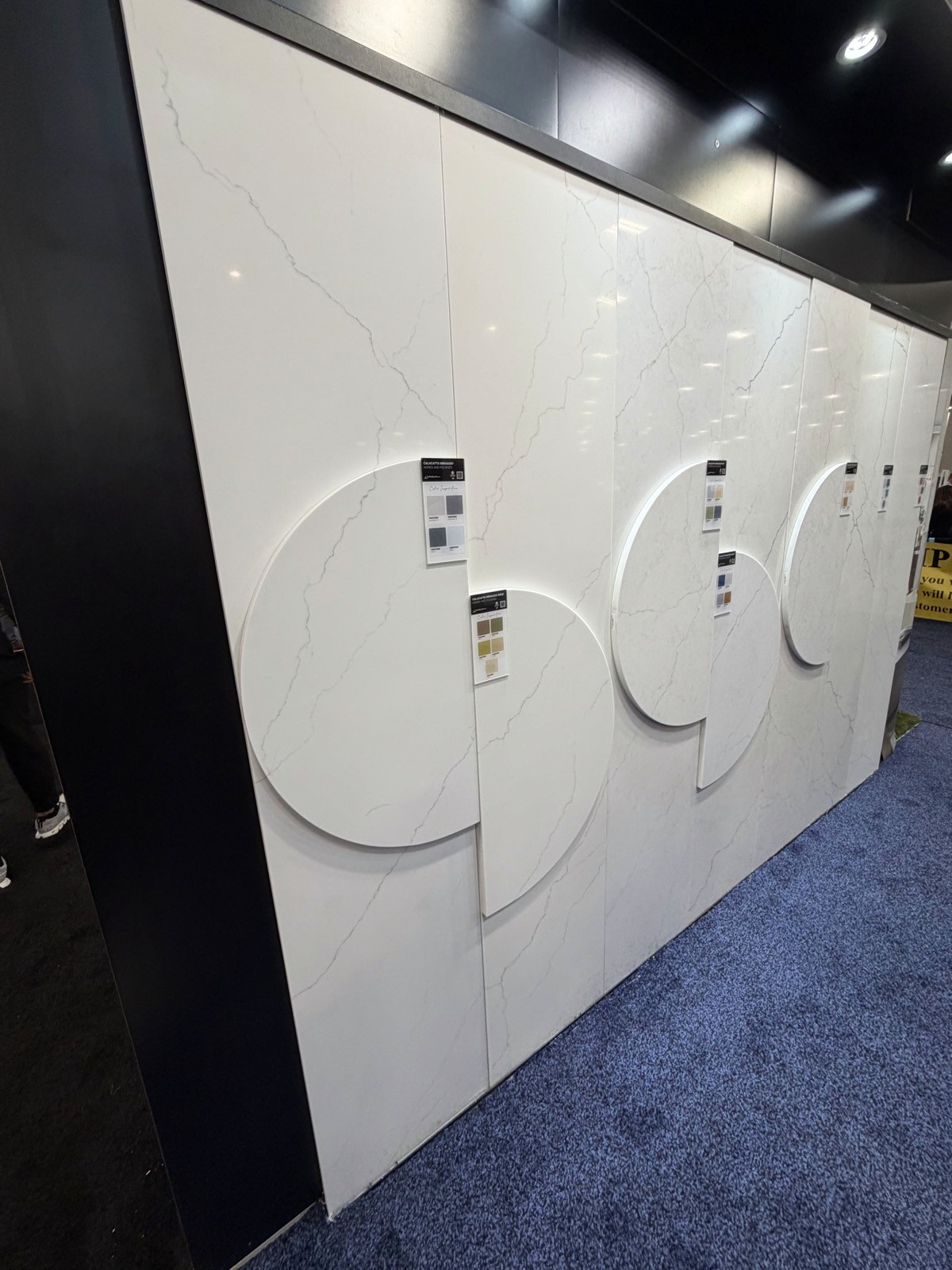
Five years ago, almost nobody walked into a Portland stone shop asking about porcelain countertops. Today it is one of the most common questions we field at Alpine Stones — and for good reason. Large-format porcelain slabs have quietly become the most technically capable surface material available, and the design world has noticed.
Porcelain slabs are made from refined clay and mineral powders, pressed under enormous pressure and fired at temperatures above 2,200°F. The result is a surface that is denser than granite, effectively non-porous, unaffected by UV light, and available in slabs as large as 126" x 63" — big enough to wrap a full kitchen island, run up a backsplash to the ceiling, or clad a fireplace with almost no visible seams.
But porcelain is not a magic material, and it is not the right answer for every Portland kitchen. It demands a fabricator who genuinely knows how to cut and handle it, and the wrong installer can turn a beautiful slab into an expensive pile of pieces. This guide covers what porcelain actually is, honest 2026 pricing for the Portland and Vancouver WA market, how it stacks up against quartz and granite, and the questions you should ask before you sign a contract.
Why Portland Homeowners Are Suddenly Asking About Porcelain
Five years ago, almost nobody walked into a Portland stone shop asking about porcelain countertops. Today it is one of the most common questions we field at Alpine Stones — and for good reason. Large-format porcelain slabs have quietly become the most technically capable surface material available, and the design world has noticed.
Porcelain slabs are made from refined clay and mineral powders, pressed under enormous pressure and fired at temperatures above 2,200°F. The result is a surface that is denser than granite, effectively non-porous, unaffected by UV light, and available in slabs as large as 126" x 63" — big enough to wrap a full kitchen island, run up a backsplash to the ceiling, or clad a fireplace with almost no visible seams.
But porcelain is not a magic material, and it is not the right answer for every Portland kitchen. It demands a fabricator who genuinely knows how to cut and handle it, and the wrong installer can turn a beautiful slab into an expensive pile of pieces. This guide covers what porcelain actually is, honest 2026 pricing for the Portland and Vancouver WA market, how it stacks up against quartz and granite, and the questions you should ask before you sign a contract.
Fabrication and Installation: Why Your Installer Matters More With Porcelain
Porcelain is the least forgiving common countertop material to fabricate, and this is the part of the decision most homeowners never think to investigate. The material's hardness and thinness mean that ordinary stone shop practices produce chipped edges, blown-out cutouts, and cracked panels.
What proper porcelain fabrication requires:
Specialized tooling. Continuous-rim porcelain-specific diamond blades and core bits, run wet, at reduced feed rates. Standard granite tooling chips porcelain on entry and exit.
CNC cutting, not hand grinders. Precision matters far more on a thin panel. We fabricate porcelain on CNC equipment so cutouts are dimensionally exact and radiused correctly.
Radiused inside corners on every cutout. A square inside corner on a sink or cooktop cutout is a crack propagation point. Every inside corner should be drilled to a radius before the cut is made. This single detail causes more porcelain failures than anything else.
Vacuum lifting and A-frame transport. A 126" thin panel must stay vertical and fully supported at all times. Carrying it flat, or off-center, cracks it.
Full-perimeter substrate support at install. Thin porcelain needs continuous support along cabinet runs, and mechanical support under any overhang. Cabinet tops sometimes need shimming or a plywood underlayment.
Mitered edge experience. Building a 12mm slab into a visually thick edge means gluing a mitered return with color-matched epoxy and polishing the joint invisible. It is skilled work and it is where quality shows.
Questions to ask any Portland fabricator before you buy porcelain:
How many porcelain jobs have you completed, and can I see one in person?
Do you cut porcelain in-house on CNC, or is it outsourced?
Do you radius-drill inside corners on all cutouts?
Is the edge in your quote an eased edge or a mitered edge, and what is the finished apparent thickness?
What happens if a panel breaks during fabrication or installation — who absorbs that cost?
That last question is the important one. At Alpine Stones, material we break is our problem, not yours. We fabricate porcelain in-house at our Portland facility, which means the same team that templates your kitchen cuts your panels and sets them — no handoffs, no finger-pointing, and no learning curve billed to your project. We are licensed in Oregon under CCB# 223660.
Living with porcelain is genuinely easy: warm water and mild soap for daily cleaning, a non-abrasive cream cleanser for anything stubborn, no sealing ever, and no special precautions around heat, wine, citrus, or oil. The two habits worth keeping are using a cutting board (to protect your knives more than the counter) and avoiding dropping heavy objects on an unsupported edge.
Frequently asked questions
Do porcelain slab countertops need to be sealed?
No. Porcelain absorbs less than 0.1% water and is functionally non-porous, so it does not need sealing at installation or later.
Is porcelain a good countertop material for an outdoor kitchen?
Yes. Porcelain's near-zero porosity, UV-stable mineral pigments and resistance to freeze-thaw cycles make it one of the strongest countertop choices for a covered outdoor kitchen in Oregon or Southwest Washington.
Why can porcelain fabrication cost more than quartz?
Porcelain is hard, thin and less forgiving. It needs porcelain-specific diamond tooling, slower wet cutting, radiused inside corners, full support and careful vertical handling. The material may price like mid-grade quartz, but the specialized labor raises the installed total.
See Porcelain in Person at Alpine Stones in Portland
Porcelain photographs beautifully, but it is a material you really need to see and touch at full slab scale before committing. Patterns that look busy in a 4-inch sample often read as elegant across a 10-foot island, and thin-profile edges that seem too minimal in a photo can look exactly right in a real kitchen.
If you are remodeling in Portland, Vancouver WA, Beaverton, Lake Oswego, Hillsboro, Tigard, Gresham, West Linn, or anywhere in the metro area, come look at porcelain alongside quartz, granite, quartzite, and marble in the same visit. Being able to compare them side by side is usually the moment the decision becomes obvious — and often the moment someone realizes the material they assumed they wanted is not actually the right fit for how they cook and live.
We will walk you through slab options, explain edge choices honestly, give you an all-inclusive written quote, and tell you plainly when porcelain is not the best value for your project.
Alpine Stones
5512 NE 105th Ave, Portland, OR 97220
Phone: (503) 837-1980
Oregon CCB# 223660
Fabrication and installation of porcelain, quartz, granite, quartzite, and marble countertops throughout the Portland metro area and Southwest Washington. Request a free estimate and we will get you scheduled for a template visit.
Related reading from the Alpine Stones blog:
Ready to talk it through? Call Alpine Stones at (503) 837-1980 to schedule a showroom visit at 5512 NE 105th Ave, Portland, OR 97220. Licensed and bonded, CCB# 223660.
Porcelain pricing varies more by brand and thickness than most surfaces, so get a number before you fall in love with a slab. Use our instant countertop quote tool for an installed price in a few minutes, or call Alpine Stones at (503) 837-1980 and we will walk you through the porcelain we actually stock.
Porcelain's UV stability makes it one of the few surfaces that genuinely belongs outdoors. See outdoor kitchen countertops in Portland for how it holds up through a Pacific Northwest winter.

Terms & Conditions
CCB#: 223660
COPYRIGHT 2025 ALPINE STONES, INC
__________________________________________________________________________________________________________________________________________________________________________________________________________________________________________________________________________________
RESOURCES
STAY CONNECTED
Mon-Fri / 9am-4pm




CCB#: 223660
COPYRIGHT 2025 ALPINE STONES, INC
__________________________________________________________________________________________________________________________________________________________________________________________________________________________________________________________________________________
Terms & Conditions
CCB#: 223660
COPYRIGHT 2025 ALPINE STONES, INC
__________________________________________________________________________________________________________________________________________________________________________________________________________________________________________________________________________________
RESOURCES
STAY CONNECTED
Mon-Fri / 9am-4pm
Terms & Conditions
CCB#: 223660
COPYRIGHT 2025 ALPINE STONES, INC
__________________________________________________________________________________________________________________________________________________________________________________________________________________________________________________________________________________
RESOURCES
STAY CONNECTED
Mon-Fri / 9am-4pm

See Porcelain in Person at Alpine Stones in Portland
Porcelain photographs beautifully, but it is a material you really need to see and touch at full slab scale before committing. Patterns that look busy in a 4-inch sample often read as elegant across a 10-foot island, and thin-profile edges that seem too minimal in a photo can look exactly right in a real kitchen.
If you are remodeling in Portland, Vancouver WA, Beaverton, Lake Oswego, Hillsboro, Tigard, Gresham, West Linn, or anywhere in the metro area, come look at porcelain alongside quartz, granite, quartzite, and marble in the same visit. Being able to compare them side by side is usually the moment the decision becomes obvious — and often the moment someone realizes the material they assumed they wanted is not actually the right fit for how they cook and live.
We will walk you through slab options, explain edge choices honestly, give you an all-inclusive written quote, and tell you plainly when porcelain is not the best value for your project.
Alpine Stones
5512 NE 105th Ave, Portland, OR 97220
Phone: (503) 837-1980
Oregon CCB# 223660
Fabrication and installation of porcelain, quartz, granite, quartzite, and marble countertops throughout the Portland metro area and Southwest Washington. Request a free estimate and we will get you scheduled for a template visit.
Related reading from the Alpine Stones blog:
Ready to talk it through? Call Alpine Stones at (503) 837-1980 to schedule a showroom visit at 5512 NE 105th Ave, Portland, OR 97220. Licensed and bonded, CCB# 223660.
Porcelain pricing varies more by brand and thickness than most surfaces, so get a number before you fall in love with a slab. Use our instant countertop quote tool for an installed price in a few minutes, or call Alpine Stones at (503) 837-1980 and we will walk you through the porcelain we actually stock.
Porcelain's UV stability makes it one of the few surfaces that genuinely belongs outdoors. See outdoor kitchen countertops in Portland for how it holds up through a Pacific Northwest winter.
Fabrication and Installation: Why Your Installer Matters More With Porcelain
Porcelain is the least forgiving common countertop material to fabricate, and this is the part of the decision most homeowners never think to investigate. The material's hardness and thinness mean that ordinary stone shop practices produce chipped edges, blown-out cutouts, and cracked panels.
What proper porcelain fabrication requires:
Specialized tooling. Continuous-rim porcelain-specific diamond blades and core bits, run wet, at reduced feed rates. Standard granite tooling chips porcelain on entry and exit.
CNC cutting, not hand grinders. Precision matters far more on a thin panel. We fabricate porcelain on CNC equipment so cutouts are dimensionally exact and radiused correctly.
Radiused inside corners on every cutout. A square inside corner on a sink or cooktop cutout is a crack propagation point. Every inside corner should be drilled to a radius before the cut is made. This single detail causes more porcelain failures than anything else.
Vacuum lifting and A-frame transport. A 126" thin panel must stay vertical and fully supported at all times. Carrying it flat, or off-center, cracks it.
Full-perimeter substrate support at install. Thin porcelain needs continuous support along cabinet runs, and mechanical support under any overhang. Cabinet tops sometimes need shimming or a plywood underlayment.
Mitered edge experience. Building a 12mm slab into a visually thick edge means gluing a mitered return with color-matched epoxy and polishing the joint invisible. It is skilled work and it is where quality shows.
Questions to ask any Portland fabricator before you buy porcelain:
How many porcelain jobs have you completed, and can I see one in person?
Do you cut porcelain in-house on CNC, or is it outsourced?
Do you radius-drill inside corners on all cutouts?
Is the edge in your quote an eased edge or a mitered edge, and what is the finished apparent thickness?
What happens if a panel breaks during fabrication or installation — who absorbs that cost?
That last question is the important one. At Alpine Stones, material we break is our problem, not yours. We fabricate porcelain in-house at our Portland facility, which means the same team that templates your kitchen cuts your panels and sets them — no handoffs, no finger-pointing, and no learning curve billed to your project. We are licensed in Oregon under CCB# 223660.
Living with porcelain is genuinely easy: warm water and mild soap for daily cleaning, a non-abrasive cream cleanser for anything stubborn, no sealing ever, and no special precautions around heat, wine, citrus, or oil. The two habits worth keeping are using a cutting board (to protect your knives more than the counter) and avoiding dropping heavy objects on an unsupported edge.
Frequently asked questions
Do porcelain slab countertops need to be sealed?
No. Porcelain absorbs less than 0.1% water and is functionally non-porous, so it does not need sealing at installation or later.
Is porcelain a good countertop material for an outdoor kitchen?
Yes. Porcelain's near-zero porosity, UV-stable mineral pigments and resistance to freeze-thaw cycles make it one of the strongest countertop choices for a covered outdoor kitchen in Oregon or Southwest Washington.
Why can porcelain fabrication cost more than quartz?
Porcelain is hard, thin and less forgiving. It needs porcelain-specific diamond tooling, slower wet cutting, radiused inside corners, full support and careful vertical handling. The material may price like mid-grade quartz, but the specialized labor raises the installed total.
See Porcelain in Person at Alpine Stones in Portland
Porcelain photographs beautifully, but it is a material you really need to see and touch at full slab scale before committing. Patterns that look busy in a 4-inch sample often read as elegant across a 10-foot island, and thin-profile edges that seem too minimal in a photo can look exactly right in a real kitchen.
If you are remodeling in Portland, Vancouver WA, Beaverton, Lake Oswego, Hillsboro, Tigard, Gresham, West Linn, or anywhere in the metro area, come look at porcelain alongside quartz, granite, quartzite, and marble in the same visit. Being able to compare them side by side is usually the moment the decision becomes obvious — and often the moment someone realizes the material they assumed they wanted is not actually the right fit for how they cook and live.
We will walk you through slab options, explain edge choices honestly, give you an all-inclusive written quote, and tell you plainly when porcelain is not the best value for your project.
Alpine Stones
5512 NE 105th Ave, Portland, OR 97220
Phone: (503) 837-1980
Oregon CCB# 223660
Fabrication and installation of porcelain, quartz, granite, quartzite, and marble countertops throughout the Portland metro area and Southwest Washington. Request a free estimate and we will get you scheduled for a template visit.
Related reading from the Alpine Stones blog:
Ready to talk it through? Call Alpine Stones at (503) 837-1980 to schedule a showroom visit at 5512 NE 105th Ave, Portland, OR 97220. Licensed and bonded, CCB# 223660.
Porcelain pricing varies more by brand and thickness than most surfaces, so get a number before you fall in love with a slab. Use our instant countertop quote tool for an installed price in a few minutes, or call Alpine Stones at (503) 837-1980 and we will walk you through the porcelain we actually stock.
Porcelain's UV stability makes it one of the few surfaces that genuinely belongs outdoors. See outdoor kitchen countertops in Portland for how it holds up through a Pacific Northwest winter.
Porcelain vs. Quartz vs. Granite: An Honest Comparison
Most Portland homeowners arrive already deciding between quartz and granite, so here is where porcelain genuinely wins, genuinely loses, and where it is a wash.
Where porcelain beats engineered quartz
Heat and UV, decisively. Quartz is roughly 90% ground natural quartz bound with 7–10% polymer resin, and that resin is the weak link — it discolors under sustained sun exposure and scorches under hot cookware. If your kitchen has a wall of glass facing the Willamette, or if you are surfacing anything outdoors on a covered patio, porcelain is the better engineering choice and quartz manufacturers themselves will tell you not to use their product outside.
Porcelain also wins on slab size. A typical quartz slab runs about 130" x 65"; large-format porcelain reaches similar lengths at greater consistency and in thin gauges that allow full-height backsplashes and waterfall panels without added structural load.
Where quartz beats porcelain
Fabrication forgiveness, edge options, and cost at the low end. Quartz takes a bullnose, ogee, or thick mitered laminated edge easily. Porcelain's thin profile means you are generally choosing between a simple eased edge or a mitered "box" edge that builds visual thickness — beautiful, but more labor. Quartz is also more widely stocked, so the entry price point is lower and lead times are shorter. And every countertop shop in the Portland metro can fabricate quartz; far fewer can properly fabricate porcelain.
Where porcelain beats natural granite
Consistency and maintenance. Granite is a natural product, so the slab you approve is the slab you get, veining quirks and all — which many homeowners love, but it makes planning a large multi-slab kitchen harder. Porcelain gives you repeatable patterning across as many slabs as you need. Porcelain also never needs sealing, while granite in a wet Pacific Northwest kitchen benefits from resealing every one to three years.
Where granite beats porcelain
Depth, edge work, and value per square foot in the mid range. Nothing printed can fully replicate the three-dimensional crystalline depth of a real granite or quartzite slab viewed in raking light. Granite at 3cm also handles heavy decorative edge profiles and unsupported overhangs that porcelain cannot. And a mid-grade granite is often the least expensive path to a durable, permanent stone countertop in Oregon.
The short version: choose porcelain for heat, sun, outdoor use, huge uninterrupted surfaces, and ultra-thin modern profiles. Choose quartz for a bulletproof low-maintenance interior kitchen at the best price. Choose granite or quartzite when you want genuine natural stone character and traditional edge detailing.
Still working out a budget? Get an installed price from your own measurements in about two minutes with the Alpine Stones instant quote tool, or call (503) 837-1980 to talk it through with a real person.
What Porcelain Countertops Cost in Portland in 2026
Porcelain sits in the mid-to-upper range of the Portland countertop market. The material itself is often priced comparably to a mid-grade quartz, but fabrication labor runs higher because cutting porcelain requires different tooling, slower feed rates, and more careful handling. Here is what Portland and Vancouver WA homeowners should realistically budget, installed:
Entry-level porcelain (basic colors, 12mm): roughly $70–$95 per square foot installed
Mid-range designer patterns (marble looks, 12mm–20mm): roughly $95–$130 per square foot installed
Premium / through-body / bookmatched panels: roughly $130–$190+ per square foot installed
For a typical Portland kitchen with about 45 square feet of counter plus a 9-foot island, that generally lands between $5,500 and $11,000 for a complete porcelain installation. Add-ons that move the number:
Mitered box edge to make a 12mm slab read as a 2" or 3" thick counter: commonly $45–$90 per linear foot. This is the single most common upcharge and it is worth understanding before you compare bids.
Full-height backsplash from the same slab: often $55–$95 per square foot, and one of porcelain's best design moves.
Waterfall island panels: typically $900–$2,200 depending on height and whether the veining is continued across the miter.
Integrated or undermount sink cutouts: porcelain cutouts require reinforcement and careful relief drilling; budget more than you would for quartz.
Cooktop and outlet cutouts: each cutout is a stress point in a thin porcelain panel, so precision matters more than in stone.
Be skeptical of a porcelain bid that comes in dramatically under the range above. It usually means one of three things: the shop is quoting 6mm material intended for wall cladding rather than counters, the edge is a plain eased edge on a thin slab (which will look flimsy), or the shop has never fabricated porcelain and is about to learn on your kitchen. All three cost more to fix than to do right.
At Alpine Stones we quote porcelain the same way we quote everything else: one all-inclusive number covering templating, fabrication, edge work, cutouts, delivery, and installation, with no surprise line items added after the template visit.
Best Applications for Porcelain in Pacific Northwest Homes
Porcelain's advantages line up unusually well with how people actually live in Oregon and Southwest Washington.
Covered outdoor kitchens. This is porcelain's clearest win. Our region cycles through wet winters, freeze-thaw swings, and bright dry summers. Porcelain's near-zero porosity means water cannot penetrate and expand in a freeze, and its fired mineral pigments do not fade in summer sun. Quartz is explicitly not warranted outdoors; granite works but needs sealing; porcelain simply does not care.
Full-height backsplashes and feature walls. Because thin porcelain is lightweight, you can run the same slab from counter to upper cabinets — or all the way to a ten-foot ceiling — without structural concerns. The visual effect of an unbroken 8-foot expanse of veining is something tile cannot imitate, and it eliminates grout lines behind the range entirely.
Fireplace surrounds. Porcelain's heat tolerance makes it the correct engineering choice for a surround, where quartz would be a code and durability problem. Large panels let you clad a modern floor-to-ceiling fireplace with one or two seams total.
Sun-drenched kitchens and greatrooms. Portland architects have been designing bigger and bigger glass walls, and homeowners with existing quartz counters in those rooms sometimes discover uneven fading after several years. Porcelain removes that risk.
Bathroom vanities, shower walls, and wet rooms. Non-porous, mold-resistant, and available in the same slab as the counter, porcelain lets you carry one material from vanity top through shower surround for a seamless spa look. It is also the easiest surface in the house to keep clean.
Commercial and high-traffic spaces. Restaurants, coffee bars, and offices around the Portland metro increasingly specify porcelain for its stain resistance and because it tolerates aggressive cleaning chemicals that would etch marble or dull quartz.
Where we steer people away from porcelain: heavily traditional kitchens that want an ogee or dupont edge, projects with lots of unsupported overhang and no cabinet support, and budget remodels where a good quartz will do the job for less. A fabricator who recommends porcelain for every project is selling, not advising.
Fabrication and Installation: Why Your Installer Matters More With Porcelain
Porcelain is the least forgiving common countertop material to fabricate, and this is the part of the decision most homeowners never think to investigate. The material's hardness and thinness mean that ordinary stone shop practices produce chipped edges, blown-out cutouts, and cracked panels.
What proper porcelain fabrication requires:
Specialized tooling. Continuous-rim porcelain-specific diamond blades and core bits, run wet, at reduced feed rates. Standard granite tooling chips porcelain on entry and exit.
CNC cutting, not hand grinders. Precision matters far more on a thin panel. We fabricate porcelain on CNC equipment so cutouts are dimensionally exact and radiused correctly.
Radiused inside corners on every cutout. A square inside corner on a sink or cooktop cutout is a crack propagation point. Every inside corner should be drilled to a radius before the cut is made. This single detail causes more porcelain failures than anything else.
Vacuum lifting and A-frame transport. A 126" thin panel must stay vertical and fully supported at all times. Carrying it flat, or off-center, cracks it.
Full-perimeter substrate support at install. Thin porcelain needs continuous support along cabinet runs, and mechanical support under any overhang. Cabinet tops sometimes need shimming or a plywood underlayment.
Mitered edge experience. Building a 12mm slab into a visually thick edge means gluing a mitered return with color-matched epoxy and polishing the joint invisible. It is skilled work and it is where quality shows.
Questions to ask any Portland fabricator before you buy porcelain:
How many porcelain jobs have you completed, and can I see one in person?
Do you cut porcelain in-house on CNC, or is it outsourced?
Do you radius-drill inside corners on all cutouts?
Is the edge in your quote an eased edge or a mitered edge, and what is the finished apparent thickness?
What happens if a panel breaks during fabrication or installation — who absorbs that cost?
That last question is the important one. At Alpine Stones, material we break is our problem, not yours. We fabricate porcelain in-house at our Portland facility, which means the same team that templates your kitchen cuts your panels and sets them — no handoffs, no finger-pointing, and no learning curve billed to your project. We are licensed in Oregon under CCB# 223660.
Living with porcelain is genuinely easy: warm water and mild soap for daily cleaning, a non-abrasive cream cleanser for anything stubborn, no sealing ever, and no special precautions around heat, wine, citrus, or oil. The two habits worth keeping are using a cutting board (to protect your knives more than the counter) and avoiding dropping heavy objects on an unsupported edge.
Frequently asked questions
Do porcelain slab countertops need to be sealed?
No. Porcelain absorbs less than 0.1% water and is functionally non-porous, so it does not need sealing at installation or later.
Is porcelain a good countertop material for an outdoor kitchen?
Yes. Porcelain's near-zero porosity, UV-stable mineral pigments and resistance to freeze-thaw cycles make it one of the strongest countertop choices for a covered outdoor kitchen in Oregon or Southwest Washington.
Why can porcelain fabrication cost more than quartz?
Porcelain is hard, thin and less forgiving. It needs porcelain-specific diamond tooling, slower wet cutting, radiused inside corners, full support and careful vertical handling. The material may price like mid-grade quartz, but the specialized labor raises the installed total.