
Quartzite Countertops in Portland, Oregon: 2026 Guide
Quartzite Countertops in Portland, Oregon: 2026 Guide
Quartzite Countertops in Portland, Oregon: 2026 Guide
What Is Natural Quartzite? Understanding the Stone
What Is Natural Quartzite? Understanding the Stone
Natural quartzite begins its life as sandstone, a sedimentary rock composed primarily of quartz grains. Over millions of years, tectonic forces push this sandstone deep underground, where temperatures exceeding 1,300°F and immense pressure cause the sand grains to recrystallize and fuse together. The result is quartzite — a stone that ranks 7 on the Mohs hardness scale, harder than granite (which typically ranks 6 to 6.5) and significantly harder than marble (3 to 5).
This is where the crucial distinction from engineered quartz becomes important. Quartz countertops (sometimes called "quartz surfaces") are manufactured products made from roughly 90-93% ground natural quartz crystals mixed with polymer resins and pigments. They're excellent surfaces, but they're factory-made. Natural quartzite, on the other hand, is quarried directly from the earth in massive blocks, then cut into slabs and polished — each one completely unique.
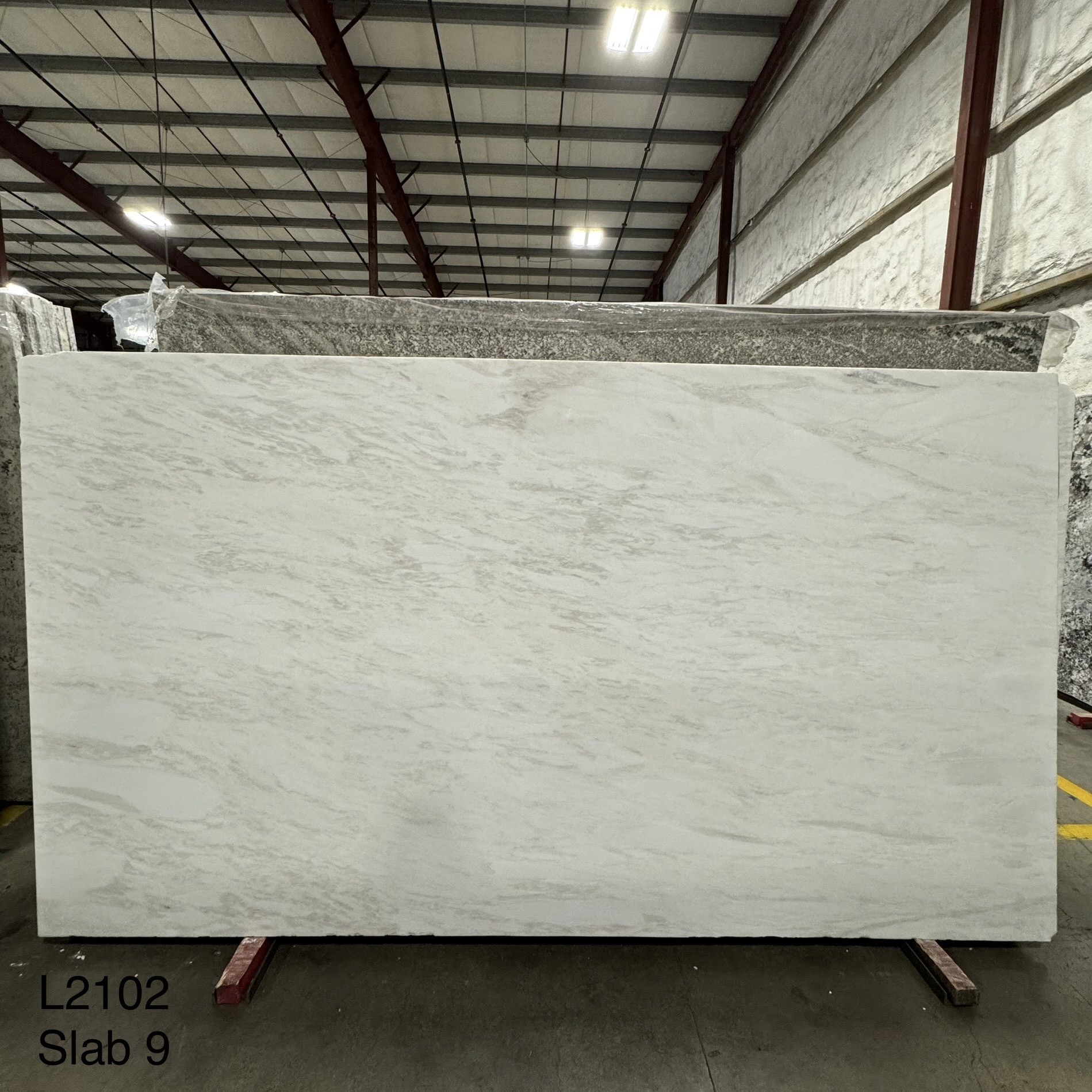
The veining patterns in quartzite come from mineral deposits that were present during its formation. Iron oxides create warm golds, rusts, and reds. Manganese produces grays and blacks. Other trace minerals contribute blues, greens, and silvers. Popular quartzite varieties you'll find at Portland-area stone yards include Taj Mahal (soft whites and golds), Sea Pearl (dramatic grays and silvers), Calacatta quartzite (marble-like whites with bold veining), and Fantasy Brown (warm neutral tones).
One of the most appealing aspects of quartzite for Portland homeowners is that it offers the elegant look of marble — those sweeping veins and soft luminosity — but with dramatically better durability and stain resistance. It's often called "the marble alternative that actually performs." Homeowners drawn to that softer, older-world look but unwilling to accept marble's maintenance should also look at travertine and limestone before deciding.
Quartzite Countertop Cost in Portland & the Surrounding Metro Area
Quartzite Countertop Cost in Portland & the Surrounding Metro Area
Understanding quartzite pricing helps you plan your remodel budget effectively. In the Portland metro area — including Clackamas, Lake Oswego, Tualatin, Beaverton, Tigard, Oregon City, and Vancouver, WA — quartzite countertop costs typically break down as follows:
Material costs for quartzite slabs generally range from $50 to $150 per square foot, depending on the variety and rarity of the stone. More common varieties like White Macaubas or Fantasy Brown fall on the lower end, while exotic selections like Azul Macaubas or Patagonia can reach the higher end. Mid-range options like Taj Mahal and Sea Pearl typically run $70 to $100 per square foot.
Fabrication and installation in the Portland area typically adds $30 to $50 per square foot, covering precision templating, CNC cutting, edge profiling, cutouts for sinks and cooktops, and professional installation. Complex layouts with multiple seams, waterfall edges, or intricate backsplash work may cost more.
Total installed cost for most Portland-area quartzite projects ranges from $80 to $200 per square foot. For a typical kitchen with 40-50 square feet of countertop space, that translates to roughly $3,200 to $10,000 depending on the stone selection and project complexity.
At Alpine Stones, we encourage homeowners to visit our Portland showroom to see and feel quartzite slabs in person. Photos don't capture the depth and translucency that many quartzite varieties display — it's a stone that truly needs to be experienced. We'll walk you through our current inventory and help you select a slab that matches both your design vision and your budget.
Quartzite's move from specialty stone to mainstream request is one of the clearest shifts in our 2026 Portland kitchen countertop trends. It's also worth noting that quartzite countertops add significant resale value to Portland-area homes. Real estate agents consistently report that natural stone countertops are among the top features that attract buyers, and quartzite's combination of beauty and durability makes it particularly appealing in competitive markets like Portland's.
Quartzite Durability & Performance for Oregon Kitchens
Quartzite Durability & Performance for Oregon Kitchens
When Portland homeowners invest in new countertops, durability is almost always a top concern — especially for busy family kitchens. Natural quartzite delivers exceptional performance across every metric that matters in daily kitchen use.
Heat Resistance: Quartzite is formed under extreme heat, so it handles hot pots and pans with ease. While we always recommend using trivets as a best practice, quartzite won't scorch, discolor, or crack from normal kitchen heat exposure. This is a significant advantage over engineered quartz, which contains resins that can be damaged by temperatures above 300°F.
Scratch Resistance: With a Mohs hardness of 7, quartzite is remarkably scratch-resistant. You can cut directly on it without damage — though we recommend cutting boards to protect your knives, not your countertop. This hardness also means quartzite resists abrasion from everyday use, maintaining its polished finish for decades.
Stain Resistance: When properly sealed, quartzite is highly resistant to staining from wine, coffee, oils, and acidic foods like lemon juice and tomato sauce. Unlike marble, which etches easily from acid contact, quartzite's dense crystalline structure provides much better chemical resistance. That durability is also why quartzite shows up constantly in restaurant and office installs. In Portland's coffee-loving culture, this matters — your morning espresso routine won't leave marks on a quartzite counter.
Longevity: A well-maintained quartzite countertop will last the lifetime of your home. We've installed quartzite surfaces in homes across Clackamas County, Washington County, and Multnomah County that look as stunning today as the day they were installed. The stone doesn't fade, doesn't delaminate, and doesn't lose its polish under normal residential use.
UV Resistance: Unlike some engineered surfaces that can yellow or fade with prolonged sun exposure, natural quartzite maintains its color regardless of UV exposure. For Portland homes with large kitchen windows (common in the area's popular mid-century and contemporary designs), this is an important consideration.
Still working out a budget? Get an installed price from your own measurements in about two minutes with the Alpine Stones instant quote tool, or call (503) 837-1980 to talk it through with a real person.
Caring for Quartzite Countertops in the Pacific Northwest
One question we hear frequently from Portland homeowners considering quartzite is: "How much maintenance does it really need?" The good news is that quartzite care is straightforward, and the Pacific Northwest climate actually makes it even easier.
Sealing: Quartzite should be sealed upon installation and resealed approximately once per year. The process takes about 15 minutes for an average kitchen — you simply apply a quality stone sealer, let it absorb for a few minutes, then wipe off the excess. Portland's moderate humidity means the sealant maintains its effectiveness well between applications. At Alpine Stones, we seal every quartzite countertop we install and provide our customers with sealer and instructions for ongoing maintenance.
Daily cleaning: For everyday cleaning, warm water and a few drops of dish soap on a soft cloth is all you need. Avoid harsh chemical cleaners, bleach, or abrasive scrubbing pads. For dried-on food, a plastic scraper works perfectly without risking the polished surface.
Spill management: While sealed quartzite is highly stain-resistant, it's best practice to wipe up spills relatively promptly — especially acidic substances like wine, citrus juice, or vinegar. This isn't about preventing damage (properly sealed quartzite handles these well), but about maintaining the sealant's integrity over time.
What to avoid: Don't use vinegar-based cleaners, ammonia, or products containing citric acid for routine cleaning. Don't sit or stand on your countertops (quartzite is strong but can crack under concentrated point loads at unsupported areas). Don't drag heavy appliances across the surface.
Portland's relatively mild climate is actually ideal for natural stone countertops, and dense quartzite is one of the few materials we will put on a covered patio (see our outdoor kitchen countertop guide). The moderate temperatures mean less thermal expansion and contraction stress compared to regions with extreme temperature swings, and the consistent indoor humidity levels help maintain sealant performance.
Why Portland Homeowners Are Falling in Love With Natural Quartzite

If you've been researching countertop materials for your Portland-area kitchen or bathroom remodel, you've likely come across the term "quartzite" — and you may have wondered how it differs from quartz. The answer is significant, and understanding the distinction could change your entire renovation plan.
Natural quartzite is a metamorphic rock formed when sandstone is subjected to extreme heat and pressure deep within the earth. The result is one of the hardest, most durable natural stones available for residential countertops — with the kind of stunning, one-of-a-kind veining and movement that no engineered material can replicate.
Here in the Portland metro area, from Lake Oswego to West Linn, Tigard to Vancouver, WA, homeowners are increasingly choosing quartzite for its perfect combination of natural beauty and practical durability. At Alpine Stones in Portland, we've seen quartzite selections surge over the past two years, and for good reason.
In this comprehensive guide, we'll walk you through everything you need to know about natural quartzite countertops — from how they're formed and how they perform, to what they cost and how to care for them in the Pacific Northwest climate.
Why Portland Homeowners Are Falling in Love With Natural Quartzite
If you've been researching countertop materials for your Portland-area kitchen or bathroom remodel, you've likely come across the term "quartzite" — and you may have wondered how it differs from quartz. The answer is significant, and understanding the distinction could change your entire renovation plan.
Natural quartzite is a metamorphic rock formed when sandstone is subjected to extreme heat and pressure deep within the earth. The result is one of the hardest, most durable natural stones available for residential countertops — with the kind of stunning, one-of-a-kind veining and movement that no engineered material can replicate.
Here in the Portland metro area, from Lake Oswego to West Linn, Tigard to Vancouver, WA, homeowners are increasingly choosing quartzite for its perfect combination of natural beauty and practical durability. At Alpine Stones in Portland, we've seen quartzite selections surge over the past two years, and for good reason.
In this comprehensive guide, we'll walk you through everything you need to know about natural quartzite countertops — from how they're formed and how they perform, to what they cost and how to care for them in the Pacific Northwest climate.
How to Choose the Right Quartzite Slab for Your Portland Home
Selecting the perfect quartzite slab is one of the most exciting parts of a countertop project. Here's what our team at Alpine Stones recommends when local homeowners visit our Portland showroom to browse quartzite options:
Consider your kitchen's lighting. Portland homes range from bright, open-concept designs with skylights to cozier spaces with ambient lighting. Lighter quartzite varieties like Taj Mahal or White Macaubas brighten darker spaces, while dramatic stones like Azul Macaubas or Fantasy Brown create stunning focal points in well-lit kitchens.
Think about your cabinetry. Quartzite's natural veining creates visual movement, so consider how it will interact with your cabinet color and style. White or light gray cabinets (extremely popular in Portland's current design trends) pair beautifully with virtually any quartzite. Darker cabinetry creates striking contrast with lighter quartzite varieties.
View slabs in person. This cannot be overstated. Every quartzite slab is unique — the veining patterns, color variations, and translucency differ from piece to piece. What looks one way on a screen may look completely different in person. Visit our showroom at 5512 NE 105th Ave A, Portland, OR 97220, where you can see full slabs and even hold samples against your cabinet and paint samples.
Plan for the full slab. Quartzite is sold by the slab, so understanding the full slab layout helps you optimize material use and minimize seams. Our fabrication team creates digital templates of your kitchen and overlays them on the actual slab you select, so you can see exactly how the veining will flow across your countertops before a single cut is made.
Ask about bookmatching. For island installations or large L-shaped kitchens, bookmatched quartzite (where two slabs from the same block are opened like a book to create a mirror-image pattern) creates an absolutely spectacular visual effect. This technique is particularly popular in Portland's high-end remodels.
Ready to explore natural quartzite for your Portland-area kitchen or bathroom? Contact Alpine Stones at (503) 837-1980 or visit our Portland showroom. Our team will guide you through our quartzite inventory, discuss your design vision, and provide a detailed quote for your project. We proudly serve Portland, Lake Oswego, West Linn, Tigard, Tualatin, Beaverton, Oregon City, Milwaukie, Vancouver WA, and the entire Portland metro area. CCB# 223660.
Frequently asked questions
Is quartzite the same as quartz?
No. Quartzite is a natural metamorphic stone cut into one-of-a-kind slabs. Quartz is a manufactured surface made from ground quartz, resin and pigments. Quartzite offers natural movement and high heat resistance; quartz offers consistent pattern and no sealing.
Does natural quartzite need to be sealed?
Yes. Quartzite should be sealed at installation and checked periodically afterward. Use warm water, a small amount of dish soap and a soft cloth for daily care, and avoid vinegar, bleach, ammonia and abrasive pads.
Why should I approve the exact quartzite slab?
Every slab differs in veining, color and translucency. Viewing the full slab lets you plan seams, bookmatching and the direction of movement before fabrication. Digital layout can show where the actual veins will land on an island or perimeter run.
The Bottom Line on Quartzite Countertops for Portland Homeowners
Natural quartzite represents the best of both worlds for Portland-area homeowners: the breathtaking beauty of natural stone with performance characteristics that rival or exceed engineered alternatives. It's harder than granite, more durable than marble, and more heat-resistant than engineered quartz — all while offering the kind of unique, one-of-a-kind aesthetic that only nature can create.
Whether you're planning a full kitchen remodel in Lake Oswego, updating a bathroom vanity in Tigard, or designing a show-stopping island for your Beaverton home, quartzite deserves serious consideration. The investment pays dividends in daily enjoyment, long-term durability, and home resale value.
At Alpine Stones, we've helped hundreds of Portland-area homeowners discover their perfect quartzite countertop. From slab selection in our Portland showroom to precision fabrication and expert installation, we handle every step of the process. Give us a call at (503) 837-1980, visit our showroom at 5512 NE 105th Ave A, Portland, OR 97220, or reach out through our website at alpinestones.com to schedule your consultation today.
Related reading from Alpine Stones
Quartzite is priced by the individual slab, not by a catalog line, so a real number matters. Start with our instant countertop quote tool for an installed estimate, then call Alpine Stones at (503) 837-1980 to reserve the specific slab you want before someone else does.
Wondering why one quartzite costs double another? It starts at the quarry. Read how Alpine Stones sources slabs, quarry to kitchen.

Terms & Conditions
CCB#: 223660
COPYRIGHT 2025 ALPINE STONES, INC
__________________________________________________________________________________________________________________________________________________________________________________________________________________________________________________________________________________
RESOURCES
STAY CONNECTED
Mon-Fri / 9am-4pm




CCB#: 223660
COPYRIGHT 2025 ALPINE STONES, INC
__________________________________________________________________________________________________________________________________________________________________________________________________________________________________________________________________________________
Terms & Conditions
CCB#: 223660
COPYRIGHT 2025 ALPINE STONES, INC
__________________________________________________________________________________________________________________________________________________________________________________________________________________________________________________________________________________
RESOURCES
STAY CONNECTED
Mon-Fri / 9am-4pm
Terms & Conditions
CCB#: 223660
COPYRIGHT 2025 ALPINE STONES, INC
__________________________________________________________________________________________________________________________________________________________________________________________________________________________________________________________________________________
RESOURCES
STAY CONNECTED
Mon-Fri / 9am-4pm

The Bottom Line on Quartzite Countertops for Portland Homeowners
Natural quartzite represents the best of both worlds for Portland-area homeowners: the breathtaking beauty of natural stone with performance characteristics that rival or exceed engineered alternatives. It's harder than granite, more durable than marble, and more heat-resistant than engineered quartz — all while offering the kind of unique, one-of-a-kind aesthetic that only nature can create.
Whether you're planning a full kitchen remodel in Lake Oswego, updating a bathroom vanity in Tigard, or designing a show-stopping island for your Beaverton home, quartzite deserves serious consideration. The investment pays dividends in daily enjoyment, long-term durability, and home resale value.
At Alpine Stones, we've helped hundreds of Portland-area homeowners discover their perfect quartzite countertop. From slab selection in our Portland showroom to precision fabrication and expert installation, we handle every step of the process. Give us a call at (503) 837-1980, visit our showroom at 5512 NE 105th Ave A, Portland, OR 97220, or reach out through our website at alpinestones.com to schedule your consultation today.
Related reading from Alpine Stones
Quartzite is priced by the individual slab, not by a catalog line, so a real number matters. Start with our instant countertop quote tool for an installed estimate, then call Alpine Stones at (503) 837-1980 to reserve the specific slab you want before someone else does.
Wondering why one quartzite costs double another? It starts at the quarry. Read how Alpine Stones sources slabs, quarry to kitchen.
How to Choose the Right Quartzite Slab for Your Portland Home
Selecting the perfect quartzite slab is one of the most exciting parts of a countertop project. Here's what our team at Alpine Stones recommends when local homeowners visit our Portland showroom to browse quartzite options:
Consider your kitchen's lighting. Portland homes range from bright, open-concept designs with skylights to cozier spaces with ambient lighting. Lighter quartzite varieties like Taj Mahal or White Macaubas brighten darker spaces, while dramatic stones like Azul Macaubas or Fantasy Brown create stunning focal points in well-lit kitchens.
Think about your cabinetry. Quartzite's natural veining creates visual movement, so consider how it will interact with your cabinet color and style. White or light gray cabinets (extremely popular in Portland's current design trends) pair beautifully with virtually any quartzite. Darker cabinetry creates striking contrast with lighter quartzite varieties.
View slabs in person. This cannot be overstated. Every quartzite slab is unique — the veining patterns, color variations, and translucency differ from piece to piece. What looks one way on a screen may look completely different in person. Visit our showroom at 5512 NE 105th Ave A, Portland, OR 97220, where you can see full slabs and even hold samples against your cabinet and paint samples.
Plan for the full slab. Quartzite is sold by the slab, so understanding the full slab layout helps you optimize material use and minimize seams. Our fabrication team creates digital templates of your kitchen and overlays them on the actual slab you select, so you can see exactly how the veining will flow across your countertops before a single cut is made.
Ask about bookmatching. For island installations or large L-shaped kitchens, bookmatched quartzite (where two slabs from the same block are opened like a book to create a mirror-image pattern) creates an absolutely spectacular visual effect. This technique is particularly popular in Portland's high-end remodels.
Ready to explore natural quartzite for your Portland-area kitchen or bathroom? Contact Alpine Stones at (503) 837-1980 or visit our Portland showroom. Our team will guide you through our quartzite inventory, discuss your design vision, and provide a detailed quote for your project. We proudly serve Portland, Lake Oswego, West Linn, Tigard, Tualatin, Beaverton, Oregon City, Milwaukie, Vancouver WA, and the entire Portland metro area. CCB# 223660.
Frequently asked questions
Is quartzite the same as quartz?
No. Quartzite is a natural metamorphic stone cut into one-of-a-kind slabs. Quartz is a manufactured surface made from ground quartz, resin and pigments. Quartzite offers natural movement and high heat resistance; quartz offers consistent pattern and no sealing.
Does natural quartzite need to be sealed?
Yes. Quartzite should be sealed at installation and checked periodically afterward. Use warm water, a small amount of dish soap and a soft cloth for daily care, and avoid vinegar, bleach, ammonia and abrasive pads.
Why should I approve the exact quartzite slab?
Every slab differs in veining, color and translucency. Viewing the full slab lets you plan seams, bookmatching and the direction of movement before fabrication. Digital layout can show where the actual veins will land on an island or perimeter run.
The Bottom Line on Quartzite Countertops for Portland Homeowners
Natural quartzite represents the best of both worlds for Portland-area homeowners: the breathtaking beauty of natural stone with performance characteristics that rival or exceed engineered alternatives. It's harder than granite, more durable than marble, and more heat-resistant than engineered quartz — all while offering the kind of unique, one-of-a-kind aesthetic that only nature can create.
Whether you're planning a full kitchen remodel in Lake Oswego, updating a bathroom vanity in Tigard, or designing a show-stopping island for your Beaverton home, quartzite deserves serious consideration. The investment pays dividends in daily enjoyment, long-term durability, and home resale value.
At Alpine Stones, we've helped hundreds of Portland-area homeowners discover their perfect quartzite countertop. From slab selection in our Portland showroom to precision fabrication and expert installation, we handle every step of the process. Give us a call at (503) 837-1980, visit our showroom at 5512 NE 105th Ave A, Portland, OR 97220, or reach out through our website at alpinestones.com to schedule your consultation today.
Related reading from Alpine Stones
Quartzite is priced by the individual slab, not by a catalog line, so a real number matters. Start with our instant countertop quote tool for an installed estimate, then call Alpine Stones at (503) 837-1980 to reserve the specific slab you want before someone else does.
Wondering why one quartzite costs double another? It starts at the quarry. Read how Alpine Stones sources slabs, quarry to kitchen.
Quartzite Durability & Performance for Oregon Kitchens
When Portland homeowners invest in new countertops, durability is almost always a top concern — especially for busy family kitchens. Natural quartzite delivers exceptional performance across every metric that matters in daily kitchen use.
Heat Resistance: Quartzite is formed under extreme heat, so it handles hot pots and pans with ease. While we always recommend using trivets as a best practice, quartzite won't scorch, discolor, or crack from normal kitchen heat exposure. This is a significant advantage over engineered quartz, which contains resins that can be damaged by temperatures above 300°F.
Scratch Resistance: With a Mohs hardness of 7, quartzite is remarkably scratch-resistant. You can cut directly on it without damage — though we recommend cutting boards to protect your knives, not your countertop. This hardness also means quartzite resists abrasion from everyday use, maintaining its polished finish for decades.
Stain Resistance: When properly sealed, quartzite is highly resistant to staining from wine, coffee, oils, and acidic foods like lemon juice and tomato sauce. Unlike marble, which etches easily from acid contact, quartzite's dense crystalline structure provides much better chemical resistance. That durability is also why quartzite shows up constantly in restaurant and office installs. In Portland's coffee-loving culture, this matters — your morning espresso routine won't leave marks on a quartzite counter.
Longevity: A well-maintained quartzite countertop will last the lifetime of your home. We've installed quartzite surfaces in homes across Clackamas County, Washington County, and Multnomah County that look as stunning today as the day they were installed. The stone doesn't fade, doesn't delaminate, and doesn't lose its polish under normal residential use.
UV Resistance: Unlike some engineered surfaces that can yellow or fade with prolonged sun exposure, natural quartzite maintains its color regardless of UV exposure. For Portland homes with large kitchen windows (common in the area's popular mid-century and contemporary designs), this is an important consideration.
Still working out a budget? Get an installed price from your own measurements in about two minutes with the Alpine Stones instant quote tool, or call (503) 837-1980 to talk it through with a real person.
Quartzite Countertop Cost in Portland & the Surrounding Metro Area
Understanding quartzite pricing helps you plan your remodel budget effectively. In the Portland metro area — including Clackamas, Lake Oswego, Tualatin, Beaverton, Tigard, Oregon City, and Vancouver, WA — quartzite countertop costs typically break down as follows:
Material costs for quartzite slabs generally range from $50 to $150 per square foot, depending on the variety and rarity of the stone. More common varieties like White Macaubas or Fantasy Brown fall on the lower end, while exotic selections like Azul Macaubas or Patagonia can reach the higher end. Mid-range options like Taj Mahal and Sea Pearl typically run $70 to $100 per square foot.
Fabrication and installation in the Portland area typically adds $30 to $50 per square foot, covering precision templating, CNC cutting, edge profiling, cutouts for sinks and cooktops, and professional installation. Complex layouts with multiple seams, waterfall edges, or intricate backsplash work may cost more.
Total installed cost for most Portland-area quartzite projects ranges from $80 to $200 per square foot. For a typical kitchen with 40-50 square feet of countertop space, that translates to roughly $3,200 to $10,000 depending on the stone selection and project complexity.
At Alpine Stones, we encourage homeowners to visit our Portland showroom to see and feel quartzite slabs in person. Photos don't capture the depth and translucency that many quartzite varieties display — it's a stone that truly needs to be experienced. We'll walk you through our current inventory and help you select a slab that matches both your design vision and your budget.
Quartzite's move from specialty stone to mainstream request is one of the clearest shifts in our 2026 Portland kitchen countertop trends. It's also worth noting that quartzite countertops add significant resale value to Portland-area homes. Real estate agents consistently report that natural stone countertops are among the top features that attract buyers, and quartzite's combination of beauty and durability makes it particularly appealing in competitive markets like Portland's.
Caring for Quartzite Countertops in the Pacific Northwest
One question we hear frequently from Portland homeowners considering quartzite is: "How much maintenance does it really need?" The good news is that quartzite care is straightforward, and the Pacific Northwest climate actually makes it even easier.
Sealing: Quartzite should be sealed upon installation and resealed approximately once per year. The process takes about 15 minutes for an average kitchen — you simply apply a quality stone sealer, let it absorb for a few minutes, then wipe off the excess. Portland's moderate humidity means the sealant maintains its effectiveness well between applications. At Alpine Stones, we seal every quartzite countertop we install and provide our customers with sealer and instructions for ongoing maintenance.
Daily cleaning: For everyday cleaning, warm water and a few drops of dish soap on a soft cloth is all you need. Avoid harsh chemical cleaners, bleach, or abrasive scrubbing pads. For dried-on food, a plastic scraper works perfectly without risking the polished surface.
Spill management: While sealed quartzite is highly stain-resistant, it's best practice to wipe up spills relatively promptly — especially acidic substances like wine, citrus juice, or vinegar. This isn't about preventing damage (properly sealed quartzite handles these well), but about maintaining the sealant's integrity over time.
What to avoid: Don't use vinegar-based cleaners, ammonia, or products containing citric acid for routine cleaning. Don't sit or stand on your countertops (quartzite is strong but can crack under concentrated point loads at unsupported areas). Don't drag heavy appliances across the surface.
Portland's relatively mild climate is actually ideal for natural stone countertops, and dense quartzite is one of the few materials we will put on a covered patio (see our outdoor kitchen countertop guide). The moderate temperatures mean less thermal expansion and contraction stress compared to regions with extreme temperature swings, and the consistent indoor humidity levels help maintain sealant performance.
How to Choose the Right Quartzite Slab for Your Portland Home
Selecting the perfect quartzite slab is one of the most exciting parts of a countertop project. Here's what our team at Alpine Stones recommends when local homeowners visit our Portland showroom to browse quartzite options:
Consider your kitchen's lighting. Portland homes range from bright, open-concept designs with skylights to cozier spaces with ambient lighting. Lighter quartzite varieties like Taj Mahal or White Macaubas brighten darker spaces, while dramatic stones like Azul Macaubas or Fantasy Brown create stunning focal points in well-lit kitchens.
Think about your cabinetry. Quartzite's natural veining creates visual movement, so consider how it will interact with your cabinet color and style. White or light gray cabinets (extremely popular in Portland's current design trends) pair beautifully with virtually any quartzite. Darker cabinetry creates striking contrast with lighter quartzite varieties.
View slabs in person. This cannot be overstated. Every quartzite slab is unique — the veining patterns, color variations, and translucency differ from piece to piece. What looks one way on a screen may look completely different in person. Visit our showroom at 5512 NE 105th Ave A, Portland, OR 97220, where you can see full slabs and even hold samples against your cabinet and paint samples.
Plan for the full slab. Quartzite is sold by the slab, so understanding the full slab layout helps you optimize material use and minimize seams. Our fabrication team creates digital templates of your kitchen and overlays them on the actual slab you select, so you can see exactly how the veining will flow across your countertops before a single cut is made.
Ask about bookmatching. For island installations or large L-shaped kitchens, bookmatched quartzite (where two slabs from the same block are opened like a book to create a mirror-image pattern) creates an absolutely spectacular visual effect. This technique is particularly popular in Portland's high-end remodels.
Ready to explore natural quartzite for your Portland-area kitchen or bathroom? Contact Alpine Stones at (503) 837-1980 or visit our Portland showroom. Our team will guide you through our quartzite inventory, discuss your design vision, and provide a detailed quote for your project. We proudly serve Portland, Lake Oswego, West Linn, Tigard, Tualatin, Beaverton, Oregon City, Milwaukie, Vancouver WA, and the entire Portland metro area. CCB# 223660.
Frequently asked questions
Is quartzite the same as quartz?
No. Quartzite is a natural metamorphic stone cut into one-of-a-kind slabs. Quartz is a manufactured surface made from ground quartz, resin and pigments. Quartzite offers natural movement and high heat resistance; quartz offers consistent pattern and no sealing.
Does natural quartzite need to be sealed?
Yes. Quartzite should be sealed at installation and checked periodically afterward. Use warm water, a small amount of dish soap and a soft cloth for daily care, and avoid vinegar, bleach, ammonia and abrasive pads.
Why should I approve the exact quartzite slab?
Every slab differs in veining, color and translucency. Viewing the full slab lets you plan seams, bookmatching and the direction of movement before fabrication. Digital layout can show where the actual veins will land on an island or perimeter run.